
Guatemala
Social debt and sustainable development goals: A civil society perspective
Published on Mon, 2018-10-22 12:06
In Guatemala the main complaint about the State is its absence. “We have the sensation that there is no government,” reports Helmer Velazquez, director of the cooperatives and NGOs association Congcoop, “because taxes are so low and the 'state captors' don't even pay them, thanks to tax exemptions or plain avoidance, which leaves the exploitation of natural resources as the only funding source.” “This wouldn't be a problem if we didn't have seven million people living in poverty: Half of the population! And poverty is extreme for three million of them. Very calm, the government reported in 2017 ‘institutional progress’ by linking the SDGs with the national development plan K'atun 2032. In substantive terms, nothing.” |
Published on Wed, 2017-08-23 09:46
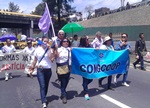
Guatemala should abandon the old patterns of ‘development’ based on the extraction of natural wealth, environmental predation and exploitation of cheap labour, and turn its gaze towards more creative and inclusive forms of production, promote democracy and make the distribution of wealth and political power more equitable, recommends the civil society report on the SDGs contributed by Helmer Velasquez and Arlyn Jimenez of the Coordination of NGOs and Cooperatives of Guatemala (CONGCOOP). |
Published on Fri, 2016-08-05 12:06
Guatemala reached the 2015 deadline for achieving the Millennium Development Goals (MDGs) without achieving a single one. To meet the 17 Sustainable Development Goals (SDGs) agreed in the 2030 Agenda for Sustainable Development, it is essential that social organizations play an important role. But this will only be possible if social action is matched by state and political will, which must be expressed in political and budgetary changes. So far, the state has expressed only good wishes. A long list of shortcomings frames the barely positive scenario outlined to comply with the SDGs in Guatemala. If these great challenges are not faced by taking the necessary actions, the state will not meet the demands of the population and the SDGs will not be met by 2030 either. |
Published on Sun, 2011-06-19 23:02
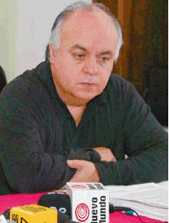
Source The Ministry of Public Health and Social Welfare of Guatemala is undergoing a crisis and needs additional funds to fulfil its caregiving functions, warned Alejandro Aguirre, coordinator of the Citizen Participation programme of the NGOs and Cooperatives Coordination (Congcoop, national focal point of Social Watch). According to a study carried out by Congcoop, hospitals had a 1.6 billion quetzal budget (approximately 200 million dollars) last year, amount that was reduced this year to 1.5 billion quetzal (some 188 million dollars). About 300 million additional quetzal (37 million dollars) would be needed to prevent a public health system crisis. |
SUSCRIBE TO OUR NEWSLETTER
 |
