Inspiration for a ‘Beyond 2030’ agenda from the legacy of Jens Martens
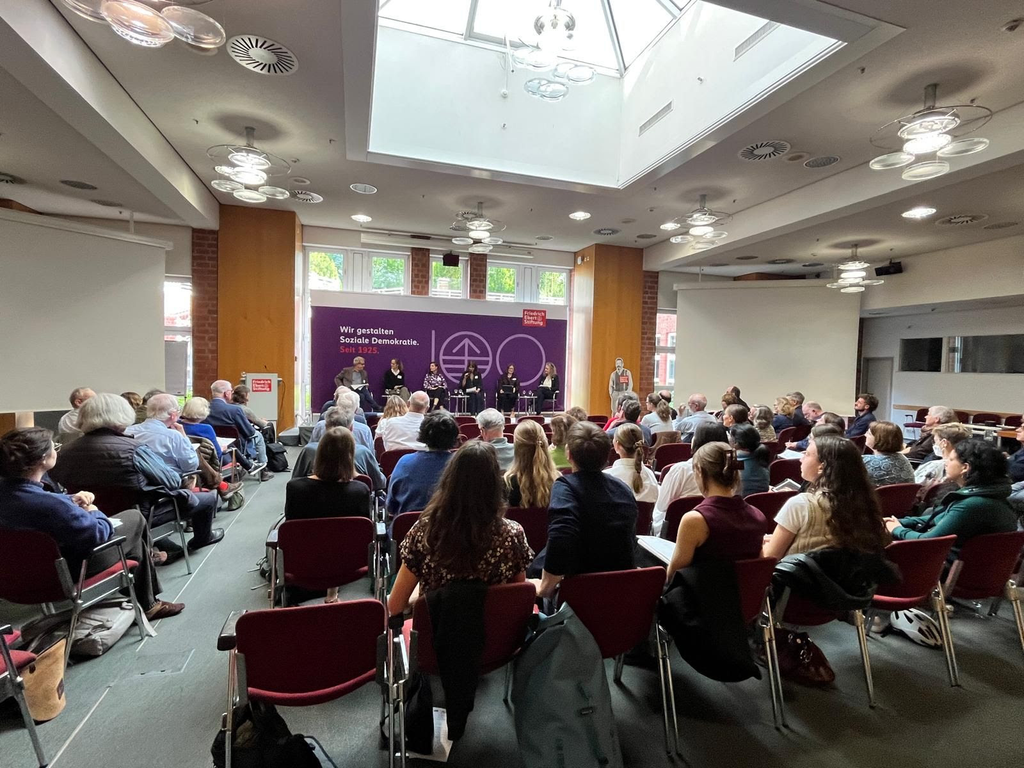
Bonn. September 23, 2026
Intervention by Roberto Bissio
„Was sind das für Zeiten, wo
Ein Gespräch über Bäume fast ein Verbrechen ist
Weil es ein Schweigen über so viele Untaten einschließt!“
What sort of times are these, when
a conversation about trees is almost a crime
because it implies a silence about so many atrocities!
Meine Damen un Herren, Ladies and gentlemen,
I began my speech with a quote from Bertolt Brecht’s Gedicht “An die Nachgeborenen”, in the hope that talking about trees, forests and sustainable development does not mean hiding injustices, but rather seeking ways to overcome them.
The aim of this meeting is to discuss options for a global sustainability policy, which is precisely the subject of Jens Martens’ latest work. Global sustainability and the role of civil society in the global reorganisation following the fall of the Berlin Wall was already the subject of Jens’s early works in the early 1990s. The earliest entry in the bibliography published by GPF-Europe dates from 1988 and takes stock of the first ten years of the World Bank’s Development Report.
The World Bank, with its pharaonic projects that destroyed the environment and its ‘structural adjustment’ policies, was identified by NGOs as the enemy to be fought at that time.
Together with other environmentalist colleagues and human rights defenders, I travelled through German-speaking countries in 1994 as part of the ‘Fifty Years Is Enough’ campaign against the World Bank. I took in intense and in-depth discussions in Wuppertal and Bonn, organised by Weltwirtschaft, Ökologie & Entwicklung (WEED).
Peter Wahl, Barbara Unmüssig and many others were there. WEED was the organisation where the young Jens worked, and he may well have been present too, although I must admit I do not recall him.
In Switzerland, the campaign was ‘Two years is enough’ because, due to its neutrality, Switzerland was absent from international organisations such as the World Bank until the 1990’s. In Bern, a senior official from the Ministry of Finance told us frankly: ‘Why should we leave the World Bank, when we get more money from contracts than we put in?’.
Perhaps unwittingly, his candour laid bare the root of the problem. Decades later, the UN Secretary-General, António Guterres, put it this way: “The global financial system is morally bankrupt. It favours the rich and punishes the poor.”
In 1994 the WTO was created, another step towards institutionalizing globalization, and that was also the year when the negotiating process leading up to the Social Summit began, and with it my collaboration with Jens. WEED was moving to Berlin; Jens decided to stay in Bonn and set up Global Policy Forum Europe. We discussed, campaigned and wrote pamphlets, petitions and reports together over the next 30 years.
At that time, we NGOs had a heated debate with then Chilean Ambassador to the UN, Juan Somavía, who had just been appointed to chair the preparatory process for the Social Summit. “What is the point of a Social Summit if structural adjustment – which is slashing social services everywhere – is not on the agenda?”
“First we had to hold the Summit,” replied Somavía. “Now it is civil society’s responsibility to put structural adjustment on the agenda.”
We accepted the challenge, we achieved that objective and, with it, the first United Nations resolution criticising the ruthless way these adjustments were being implemented. By the way, you don’t hear about structural adjustments anymore. The name was changed and now called it is called ‘austerity policies’ or, more recently, ‘buffer creation’, without altering their essence.
In the nineties, after the end of the Cold War, there was a lot of hope about a “peace dividend”, since a lot of military expenditure would not be necessary anymore. Somavía wanted to ensure that the Social Summit would show a path for that dividend to escape the usual logic of North South imposition of policies in exchange for promises of aid. Each of the ten ‘commitments’ of the Social Summit included actions to be taken at national and international level by governments in both the North and the South, including full employment /which was a Northern issue), the eradication (and not merely reduction) of poverty, of greater interest in the South, and gender equality for people everywhere.
As NGOs, we had a “benchmark” to assess the Sumit where a global Financial Transaction Tax was the main demand. We did not achieve that, but we nevertheless welcomed the outcomes of the Copenhagen Summit, and on the final day of the conference, Social Watch was established.” We will pretend we believe you, and in a year, we will come back to check what you have done”. In other words, using “naming and shaming” to promote accountability among governments in both the North and the South regarding their commitments. The Social Summit had raised enormous expectations, and in Germany a very broad coalition was formed, chaired by Ruth Brandt and comprising trade unions, foundations, religious institutions, research centres and solidarity organisations. Jens Martens acted as secretary.
A brief aside. Around that time, I travelled to Berlin for the first time, whilst the city was amid post-Wall reconstruction, and I had the immense privilege of having Ruth as my tour guide, showing me her city from her unique perspective.
In 1997, Ruth Brandt presented the first report from the German Social Watch coalition to the United Nations. It was barely ten lines long and caused a scandal because it stated, “the German government refuses to admit that there is poverty in Germany”. Other EU members commented in private that this was not fair, because according to European standards poverty in Germany was about 9%, but the incident showed the reluctance of developed country governments to report about their own policies at global forum.
Subsequent reports were almost always co-authored by Jens Martens, alongside Ruth Brandt, and later included the signatures of Peter Eisenblätter, Klaus Heidel, Jürgen Reichel, Saskia Richter and many others. The German NGO Forum became Social Watch Deutschland and published extensive annual reports, in addition to its contribution to the global report.
The members of Social Watch-Deutschland included Brot für die Welt, Caritas International, DGB-Bildungswerk, Diakonisches Werk der EKD, Evangelischer Entwicklungsdienst, Friedrich-Ebert-Stiftung, IG Metall, terre des hommes, WEED, WOMNET/NRO-Frauenforum and, of course, Jen’s own Global Policy Forum Europe.Jens became a member of the SW international steering group and later its co-chair for many years, thus technically my boss.
But neoliberalism was on the rise. The United Nations had attempted in the 1970s to curb the excesses of multinationals – or at least monitor their impact. Now it was opening its doors to them through the Global Compact, and Secretary-General Kofi Annan travelled to Davos to promote it.
OECD countries were reluctant to report, as we have seen. At the same time, the United Nations feared becoming irrelevant in a globalised world that favoured other forums, such as the WTO or the IMF and discussions were under way, outside the UN, to impose on developing countries a multilateral agreement on investment advantageous to multinational corporations.
Thus, during the special session of the General Assembly to review the Social Summit after five years, in 2000, the UN, the IMF, the OECD and the World Bank jointly launched their “Better World for All” report that summarized seven “international development goals”, listing targets that developing countries were expected to achieve. Social Watch and other organisations resisted. We rebaptized the report “Bretton Woods for All”, a protest that later led to the inclusion of a vague eighth goal, spelling out some of the responsibilities of rich countries to make the other goals possible – and which they never fulfilled.
It is fair to point out that amongst those who most enthusiastically promoted these ‘Millennium Goals’ were the development cooperation ministers, mainly women at that time, at least for the biggest donors. The budgets of their ministries were under threat from so-called ‘aid fatigue’, and they thought that a good defence would be to demonstrate ‘concrete and tangible results’ and ‘value for money’.
In retrospect, I have concluded that they confused the aspiration of the Global South – which is development – with the tool intended to contribute to it, which is development cooperation. And since development cooperation is what funds the international development agencies and most of the international NGOs, nobody – or very few voices – dared to criticise that shift.
The international community reduced the objective of international cooperation to essentially one goal: to halve extreme poverty worldwide by 2015, measured by the one-dollar-a-day threshold. After this target was approved, the World Bank suggested that “for technical reasons”, the baseline should not be the year 2000, when the promise was formulated, but 1990. During that decade, China was engaged in massive anti-poverty programmes that paved the way for its subsequent economic leap forward; consequently, the target—as measured in this way and scheduled for 2015—had already been achieved by the time the process began.
In this climate of ‘the end of history’, where globalisation and privatisation were seen as the only possible path, Jens Martens continued to write against the influence of corporations and in favour of an international instrument that would hold them accountable for human rights violations. Long before it became fashionable, Barbara Adams and Jens Martens scrutinised the inadequacy of the UN’s funding mechanisms, the influence of private foundations within the United Nations, and how voluntary funding mechanisms distort agendas approved by consensus in favour of the will of a handful of donor countries.
But the international development machinery, dazzled by the (apparent) success of globalisation in reducing poverty, failed to recognise the dramatic rise in inequalities and environmental destruction.
As the second sustainable development summit in Rio approached in 2012, Jens Martens called on Social Watch, Terre des Hommes, Third World Network, DAWN, Global Policy Forum, the Friedrich-Ebert-Stiftung and other organisations and experts such as Ernst Ulrich von Weizsäcker and Henning Melber to form a ‘think tank’ that could inspire governments to change course.
Another brief anecdote. Some of the initial meetings of the Reflection Group were held at Jens’ home here in Bonn. His mother was there one day and during the coffee break we chatted at the kitchen, while on a neighbouring building, a school probably, many refugee families from Syria had established their provisional residence, with laundry hanging on the balconies. “That was us” she told me, “when we arrived here from Silesia after the war…” I understood that Jens’ solidarity and empathy was not only an intellectual conviction, but also an emotional value taught by his mother.
The Civil Society Reflection Group on Global Development Perspectives brought together 18 civil society activists and scholars from different disciplines from around the globe to look beyond conventional development concepts and goals, question the models and measures of development and social progress, and presented alternatives. “Change the mindset” was the title of the first collective statement of the group, arguing that states, and the governments that orient states and the politicians that form those governments, should not elude their responsibilities or outsource them to the hidden forces that manipulate the markets.
Shortly before the Rio 2012 Summit, the group issued a report titled “No future without justice”, linking sustainable development with social and gender principles and goals and those with human rights. It seems obvious now, but for development agencies the link between their work and human rights was just not there and still is absent for many of them. It introduced the problem of inequalities into the debate, the inadequacy of GDP as a measure of progress, and the notion that the human aspiration for justice, be it climate justice, gender justice, social justice or plain old fair justice system of courts and judges is the greatest driver of change.
Rio took some of these ideas. Many others were incorporated in the 2030 agenda for sustainable development, that substituted the MDGs with a much more comprehensive set of 17 SDGs. The intergovernmental negotiation process was quite unique and interesting, because instead of resulting in a “lower common denominator” as is usual in the UN summits, the governments felt encouraged to be ambitious. And they got rid (at least conceptually) of the N-S divide. No country is sustainably developed and the comparative wealth of some is often the result of “externalizing” contamination and social costs to the most vulnerable, and to women in poor countries especially.
The new sustainable development agenda included many dimensions beyond the typical “social” issues of poverty, unemployment and discrimination, and therefore Social Watch merged with other organizations and transformed its yearly report in the “Spotlight Reports” whose size and format was inherited from the Social Watch reports, to evidence a continuity, and of which Jens became one of the editors and de facto secretary.
At a time when ink on paper was still a valid support for ideas, this team published 25 global reports between 1996 and 2021, most of them in several languages, and they carried over eight hundred national reports, each of them submitted by local organizations that organized their dissemination and used them in direct or indirect interlocution with the authorities-. That is a lot of evidence offered to those that make policies.
But what evidence do we have about the impact of so much reporting? Shortly after the approval of the SDGs, I conducted a workshop in Chile with members of Social Watch coalitions from Latin America on how to report and how to assess progress towards sustainable development. To warm up, I suggested an exercise. “Let’s build an indicator” I proposed and asked participants “on a scale of 1 to 10, what had been the result of your reporting in terms of influencing policies?
The replies started to come from the public and none was bigger then 3, with some even saying “zero” which was below the worse. I was fearing disaster, because we had planned for a whole day of study on effective reporting and those with experience were saying that the reports were useless.
“Stop, stop!” intervened Helmer Velásquez, head of the Guatemalan cooperatives’ confederation. “The real question is not about the impact of a paper we submitted, but about the process to write that paper, the research we did, the organizing, the consensus building and the writing of an alternative common narrative, and how that helped build a stronger civil society. And on that the note is 10, even when it will take more time to achieve change.”
Seen from that angle, Jens’ legacy is not the collection of his articles and writings, but the network of national and international organizations that were part in the processes of writing them.
The wide coalition of actors and forces defending sustainable development is now on the defensive, as Jens wrote in May. Between 2000 and 2025 the world’s per capita GDP almost tripled, from around 5.000 dollars to 14.000. But 41% of these new riches were captured by the top one per cent of the population, while the bottom 50% only got 1%.
The budgets for social protection, education, health, international cooperation and to fight climate change are being deviated to military purposes or to subsidize huge energy-consuming data centres to power Artificial Intelligence. Or to pay for skyrocketing external debts, fuelled by the energy crisis and the rise in interest rates.
The current US administration and its followers like President Milei of Argentina are dissociating themselves from Agenda 2030. In his UN speech of last year, Milei said that the 2030 Agenda “WAS ill conceived” and constitutes “a supranational programme of a socialist nature, which seeks to resolve the problems of modernity with solutions that undermine the sovereignty of nation states and violate people’s right to life, liberty and property”.
The misogynist and homophobic alliance of market fundamentalists and religious fundamentalists is deleting all references to climate change, gender equality or social protection from the international agenda whenever they have an opportunity.
In this context, to kick off a discussion on “Beyond 2030”, as many organizations and think tanks are doing, is likely to fire back. We do not have a crystal ball. Given how fast power and alliances are shifting today, it is impossible to predict which view will prevail by 2030. But one thing seems safe to say: reaching consensus on any major global issue is going to be difficult. In today’s political climate it would be impossible to get consensus on the SDGs or even on the Universal Declaration of Human Rights.
But same as the Universal Declaration is not up for discussion, we shouldn’t accept the date of 2030 as an expiry date for sustainable development. 2030 is only the time reference for some of its numerical goals, as was 2020 for others. The core of sustainable development are not the 17 goals and 165 indicators, but the “Rio principles” agreed to in 1992, reaffirmed in Rio 2012 and expanded in the 2030 Agenda for Sustainable Development and the Pact for the Future. And they don’t expire. They are not an arrival point but a horizon that is never reached but motivates the journey and shows a direction.
How can we move in that direction in the difficult circumstances of today? Next year the High-Level Political Forum on Sustainable Development happens at the Summit level. And the Summit will be informed by a scientific report, which will clearly assess how big the gap is between what is needed and what is being done. This is a clear opportunity. And, in parallel, an intergovernmental process has been started at the United Nations to discuss measures of progress “beyond GDP”. As civil society organizations we need to follow this processes closely and ask our governments what posiions they are defending in them.
Sustainable development is a concept, but it will not become “a thing” until it can be weighted and measured. What we need is not a single number, but a dashboard of numbers. Same as a car is driven with a dashboard that shows speed, battery charged and kilometres advanced. They are all related, yes, but it makes no sense to average them. The sustainability dashboard should replace GDP as the standard against which success is evaluated. GDP, or Gross Domestic Product was never intended as a measure of well-being, and it correlates negatively with environmental destruction. Jens wrote about this, of course. The development of alternative measures was already mandated by Agenda 21 in 1992 and is explicitly the last target of the 17th SDG.
This year, an expert group appointed by the UN Secretary-General proposed a dashboard of about 30 indicators. Alongside it comes a data and research agenda: it aims to strengthen national statistical systems and develop complementary indicators — indicators that capture distributional and non-market dimensions of progress. Spain and Guyana are cochairing the intergovernmental negotiations towards “Beyond GDP”.
The success of this debate could change the mindset and policies towards sustainable development and away from the obsession with growth. And it would be a key step towards understanding what Willy Brandt called in 1980 “the mutuality of interest between North and South”. So that “the search for solutions is not an act of benevolence but a condition of mutual survival”.
Danke schön