Canada
Canada and COVID-19: One Year Later The COVID-19 pandemic exacerbated fundamental inequalities in Canada, made worse by an inadequate, inconsistent and disjointed approach to safeguarding the well-being of the most vulnerable across the country. Significant financial support has been extended to businesses and households, providing a lifeline over the past 18 months, but profound gaps in Canada’s social infrastructure and income security programs continue to undermine these efforts. Meanwhile, the trend toward greater privatization and financialization proceeds apace.
This report looks at the impact of the pandemic in Canada and at the government's response since March 2020. The big question is whether Canada, by default, will revert to the “same old, same old” after the crisis. Or will it seize the opportunity to build back better, recognizing that this last mile will be the hardest.
Published on Fri, 2020-03-27 10:37
The report by Ricardo Tranjan examines the financial situation of the 3.4 million households in Canada who rent and whose primary source of income is wages and salaries or self-employment income. Everyone will be eventually touched by the economic impacts of the COVID-19 pandemic, but rent is due soon. Specifically, it addresses the following question: How many weeks or months can renters go without employment income before running out of savings?
The short answer is that almost half of them have less than a month’s worth of savings; one-third have two weeks or less.
|
Published on Sun, 2019-12-15 19:01
 |
Approving good plans and failing to implement them is also true in Canada. With the release of Opportunity for All in August 2018, followed by the introduction of the Poverty Reduction Act in November 2018, the federal government has for the first time set targets for reducing poverty in Canada, defined an official poverty line, and established a framework and a process for reporting publicly on progress – in keeping with its commitment to “end poverty in all of its forms everywhere” set out in the 2030 Agenda. The report by the Canadian Centre for Policy Alternatives praises this “significant policy win”, which provides “an architecture and different mechanisms for holding governments to account for creating a society where everyone’s basic needs are assured and their active participation in community life supported”. But, at the same time, it adds, the report “does not include any new investments in the programmes needed to achieve the strategy’s stated goals”. The targets to reduce poverty by 20 percent by 2020 and by 50 percent by 2030 “lack ambition and sense of urgency”. The report values the new plan “more as a framework than a strategy to accelerate poverty reduction.
|
Published on Fri, 2018-07-27 00:00
Kate McInturff passed away last July 27. Kate was a member of the Coordinating Committee of Social Watch (where she helped enormously to shape our research strategy and gender analysis) and a contributor to the Canadian national Social Watch reports of 2012, 2014 and 2016. As a Research Associate at the Canadian Centre for Policy Alternatives she was the main author of the enormously popular "Best and Worse Places to be a Woman in Canada" report.
|
Published on Sat, 2018-03-03 08:57
The just released Canadian federal budget for 2018 takes some positive steps forward on gender equality and science funding, but comes up short on the bold policy moves that will make a real difference —universal child care, pharmacare, health care, and tax fairness.
The government promised their citizens a budget guided by gender analysis this year, and in many ways it delivered: pay equity legislation for the public sector, ‘use it or lose it’ second parent leave, a long-awaited increase in funding to women’s organizations, and additional investments for addressing workplace harassment and funding to rape crisis centres.
|
Published on Thu, 2017-10-19 16:41
Yesterday, Canadian Centre for Policy Alternatives (CCPA) released their ranking of the best and worst cities to be a woman in Canada. The report, by CCPA senior researcher Kate McInturff, is now in its fourth year and provides an important snapshot of the discrimination faced by women across the country—underemployment, a persistent wage gap, and life-threatening barriers when it comes to health, personal security, and more.
It is also a wake-up call—a reminder that in the absence of meaningful government intervention, Canada’s gender gap has persisted.
|
Published on Thu, 2017-09-14 11:54
New Census numbers released this week show that overall incomes have risen in the past ten years in Canada. This is excellent news. Economic growth driven by rising wages is growth we can feel, growth that translates into a better life.
However, not all Canadians are having the same experience. When you look at different parts of Canada, and different Canadians, you see some important differences. This Census release doesn’t include the differences in income and poverty experienced by racialized, indigenous, and immigrant groups. For that information, we have to wait another month. However, you can already see differences in the wages of men and women and very different levels of poverty depending on which city you live in (or if you live in a city at all).
|
Published on Fri, 2017-06-09 15:36
Increasing oil and gas production while at the same time trying to reduce carbon emissions are conflicting priorities, argues a joint study by the University of Victoria, the Canadian Centre for Policy Alternatives and the Parkland Institute. The Climate Leadership Plan of the province of Alberta allows to expanding oil sands production by 53 per cent and emissions by 47 per cent above 2014 levels. To compensate and still meet Canada’s Paris Agreement commitments the rest of the Canadian economy should reduce emissions by 47 per cent by 2030. This will be virtually impossible in the time remaining barring an economic collapse.
Three new pipelines have been approved in Canada and a fourth (Energy East) is under review even though oil supply forecasts show that not all are needed. This shows, according to the study that "Canada has no energy strategy beyond liquidating its remaining non-renewable resources as fast as possible to serve the economic interests of governments of the day. What we really need is a comprehensive energy strategy that addresses both the future energy security of Canadians and Canada’s commitments on climate change".
|
Published on Mon, 2017-04-10 16:30
Men and women are different. That shouldn’t be news, but today it is. Today, the government released the first federal budget that includes a look at the differences between men and women. Differences like the fact that women are twice as likely to work part-time, do more hours of unpaid care work, are less likely to qualify for Employment Insurance and are more likely to be the victim of a violent crime.
For public spending to be effective, we need policies and programs that respond to those differences. More targeted policy is more effective policy. Otherwise we could just divide up the budget by 37 million Canadians and send everyone a cheque.
|
Published on Thu, 2017-02-09 19:36
As the Ontario and Quebec governments design their versions of a basic income pilot program, Canadians find themselves engaged in a policy question we haven’t grappled with in almost half a century: how should the welfare state evolve?
At the heart of the basic income debate is a discussion about what’s required for everyone to have a basically decent life. Implicitly, it embraces a conversation about the importance of markets in that pursuit.
|
Published on Mon, 2016-08-22 17:23
Canada's newly-elected federal Liberal government has committed to working towards achieving the goals set out in the 2030 Agenda “both at home and abroad.” However, the Government inherits a country that has been profoundly shaped by the conservative economic and social policies of the past decade. The new government will have to overcome the challenges posed by a much-diminished federal government, social and income inequality, and an economy based on growing wealth rather than wages in order to deliver on its commitment to achieving the Sustainable Development Goals.
In sharp contrast to the previous federal Conservative government, the current government has committed itself to resumed deficit spending. However, even with the increases seen in their first budget, federal programme spending remains at a historic low. Today, federal programme spending as a share of the economy stands at 13 percent of GDP, its lowest point in the past 60 years.
|
Published on Fri, 2016-05-20 10:23
Canadian Centre for Policy Alternatives (CCPA) launches the report "Shameful Neglect: Indigenous Child Poverty in Canada".
The report calculates child poverty rates in Canada, and includes the rates on reserves and in territories—something never before examined. The report also disaggregates the statistics and identifies three tiers of poverty for children in Canada, finding the worst poverty experienced by status First Nation children (51%, rising to 60% for children on reserve). The second tier encompasses other Indigenous children and disadvantaged groups (ranging from 22-32%), and the third tier consists of children who are non-Indigenous, non-racialized and non-immigrant, where the rate of 13% is similar to the OECD average.
|
Published on Mon, 2016-03-07 14:05
The study Making Women Count. The Unequal Economics of Women’s Work, looks at how women in Canada and around the world are affected by rising inequality, including the burden of unpaid work, the undervaluing of work in predominantly female fields, and the unspoken social norms that see men offered higher wages and rates of promotion than women. Women make up some of the poorest and lowest paid workers in the global economy. And, as the report shows, women are doing more and more work to grow countries’ economies without seeing equal benefits.
The study offers a number of solutions to help make women count, including a shift towards policies that support better wages and access to employment for women, better financial support of public services - like health and child care – to reduce the care burden on women, and a greater focus by governments to prioritize women’s rights.
|
Published on Fri, 2016-02-19 10:39
During the 2015 federal election campaign, the Liberal party campaigned vigorously on a promise to tackle inequality and substantially reduce child poverty. Proposals such as the Canada Child Benefit and 10% increase to the Guaranteed Income Supplement (GIS) for low-income seniors are certainly steps in the right direction.
However, the fight to eliminate poverty and inequality is far from over. These proposals in and of themselves are inadequate to accomplishing the task. This paper, which expands upon a chapter on poverty and inequality in the upcoming 2016 Alternative Federal Budget, proposes the terms of a comprehensive federal poverty reduction plan. If the government is serious about its campaign pledge to bring real economic opportunities to more people, the practical and affordable policy tools outlined here will take them some way toward that goal.
|
Published on Fri, 2015-05-22 10:53
Simmering conflicts in higher education have reached the boiling point across Canada and around the globe. Teach-ins, occupations, strikes, and mass protests are being mobilized against exorbitant tuition fees, declining educational quality, mismanagement, the commodification of research, and the suppression of free speech and critical inquiry. A Penny For Your Thoughts, a new book from CCPA's Education Project, shows how Canadian higher education has come to this point.
Through 17 real time studies, it tracks how the deteriorating condition of postsecondary education is rooted in corporatization, the process through which universities and colleges increasingly work for, with, and as businesses. The book’s central message is that the current state of Canadian universities is neither natural nor inevitable: it is the outcome of choices, policies, and actions that can be unmade and undone. Authors Claire Polster and Janice Newson do not prescribe easy recipes for achieving this. Instead, they help citizens to arrive at their own understandings of corporatization and to identify where and how they can intervene strategically in their local universities and communities to reverse its effects. By so doing, Canadians can reclaim their universities as public-serving institutions that realize their highest aspirations and meet their own, their fellow citizens’, and the global community’s most pressing needs.
|
Published on Wed, 2015-04-22 12:50
Oil prices are down. Economic growth is down. Employment rates are stagnant. Household debt is climbing to record highs. Canadians could use a break. The 2015 federal budget has one for you.
|
Published on Fri, 2014-08-29 12:00
The Prime Minister is wrapping up his ninth annual trip to Canada’s north this week. This year, like every year, the stealth ski-doo is loaded up with announcements.
Presents for everyone!
So what are women in Nunavut going to find in their stockings this year? The bulk of federal investments in economic development in the north are funnelled through the Canadian Northern Economic Development Agency, which has an annual budget of just over $50 million (although that number is projected to decline over the next few years). Much of that $50 million is currently directed towards resource development—training for folks to work in the resource sector, infrastructure to get to the resources, research to tell us where the resources are.
|
Published on Thu, 2014-06-05 11:24
As the Millennium Development Goals (MDGs) reach their end date in 2015, there is broad consensus that the development agenda which replaces them has to be universal. Whereas the MDGs applied to developing countries only, the post-2015 development agenda will apply to all countries.
To support the implementation and measurement of the post-2015 development goals, a "data revolution" has been called for that will enable governments and policymakers to better track development progress and give citizens the information they need to demand more from their governments and hold them to account.
To respond to this, The Centre for Policy Dialogue (CPD), The North-South Institute (NSI) and Southern Voice on Post-MDG International Development Goals (Southern Voice), have launched the "Post-2015 Data Test: Unpacking the Data Revolution at the Country Level", an initiative that examines how the universal post-2015 development agenda can be applied and measured across a variety of country contexts.
|
Published on Thu, 2014-05-15 09:21

Gustave Assah.
|
The participants in the civil society strategy meeting on monitoring and accountability organized by Social Watch last february in Montevideo were asked about how they personally work and relate with the huge task of making the powerful accountable. Here is what they said:
|
Published on Thu, 2013-12-12 05:53
The roles and responsibilities of unions in Canada have come under renewed scrutiny. According to CCPA, Social Watch member in Canada, provincial and federal government hostility towards organized resistance to current policies is intensifying through heated rhetoric and legislative trial balloons.
Much of this is facilitated by the current economic insecurity which reinforces individualistic attitudes and often results in resentment directed at those who have it less bad; a general lack of awareness of how much, exactly, society owes to the victories that labour unions have won for all workers and their families—not to mention a lack of understanding of the rules by which unions operate; and those in positions of power growing evermore eager to use the tools at their disposal (corporate or legislative) to challenge the rights of unions to freely engage in the collective bargaining process to improve the lot of the workers they represent.
|
Published on Mon, 2013-09-30 20:08
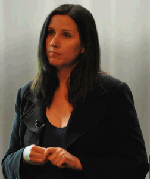
Ontario CCPA Director
Trish Hennessy
|
There are many ways to tell a story. For Trish Hennessy, Ontario director at the Canadian Centre for Policy Alternatives, one way is to look at the most searched word annually for the on-line Mirriam-Webster dictionary.
Speaking at the Whitby Courthouse Theatre to a group of Durham-region New Democrats, Hennessy noted that in 2010 the most searched word was “austerity.” A year later it was “pragmatism.” In 2012 there was a tie between “socialism” and “capitalism. Clearly something is shifting,” she said.
Many young people are being left out of the post-recession recovery and are now questioning the economic and political system that is denying them their place in society.
|
Published on Wed, 2013-07-24 22:00
A study released and authored by CCPA research associate and member of the Coordinating Committee of Social Watch Kate McInturff, says that progress on ending violence against women in Canada is stalled by the absence of a coherent national policy and consistent information about the levels of that violence.
“The difficulty of collecting data about violence against women has been a barrier to progress in ending that violence,” says the study’s author Kate McInturff. “However, the data that does exist tells us three things very clearly: this problem is big, it comes at a high cost, and we are making little or no progress in putting a stop to it.”
|
Published on Fri, 2013-03-08 00:03

People waiting for a meal
in New Brunswick.
(Photo: OldMaison.)
|
Canada’s economic policy continues to take reduction of the debt and deficit as its primary end. The means to this end include cuts to social infrastructure spending, public sector employment and the health and welfare institutions that used to put Canada near the top of most international measures of well-being.
Under cover of deficit reduction, the Government of Canada continues to withdraw funding from the civil society organizations and research institutions that measure the effectiveness of those government policies and provide alternatives to them. The impacts of those cuts are beginning to become evident as income inequality grows.
On the international stage, Canada has championed austerity measures for countries facing economic crisis, Canadian foreign aid has been in decline while the Government's criticism of multi-lateral institutions for international cooperation increases.
If market conditions were ever to close the gap in Canada, this would have been the time. Social assistance rates have remained virtually unchanged across most of Canada. Most social assistance incomes in Canada remain well below the low income cut-off rate. The overall poverty rate in Canada is 9%, however, poverty rates continue to disproportionately affect women, Aboriginal peoples, and people with disabilities. For example, one in three Aboriginal and racialized people in Canada live in poverty. One in four people with disabilities, immigrants, and female single-parents in Canada live in poverty. Across all categories rates of poverty are higher for women than for men.
|
Published on Wed, 2012-11-21 10:42
The concentration of power in the corporate sector is perpetuating income inequality trends in Canada, according to a report published by the Canadian Centre for Policy Alternatives (CCPA, a member organization of Social Watch). The study, “A Shrinking Universe: How Concentrated Corporate Power is Shaping Income Inequality in Canada”, links the rise of the richest Canadians with a shift toward more concentrated power within the country’s largest firms.
|
Published on Thu, 2012-11-08 15:28
As the federal government of Canada continues to move forward towards the Comprehensive Economic Trade Agreement (CETA) with the European Union, a new research produced by the Nova Scotian provincial office of the Canadian Center for Policy Alternatives (CCPA) finds that the benefits are being oversold while the costs and consequences are being minimized and even ignored.
|
Published on Wed, 2012-10-31 13:19

Photo : Radio Canada
|
The province of Saskatchewan’s public liquor retail system is superior to both Alberta and British Columbia’s private scheme in terms of price, revenue generation and mitigation of social harm, concluded in a new report the Saskatchewan office of the Canadian Centre for Policy Alternatives (CCPA, one of the focal points of Social Watch in that North American country) and the Parkland Institute.
|
Published on Wed, 2012-10-17 11:55

Working in Ontario. (Photo:
amber dawn pullin/Flickr/CC)
|
The ability of Canada’s young workers to find stable, well-paid, and meaningful work is increasingly under threat, warns a report released by the Canadian Centre for Policy Alternatives (CCPA). They are more likely to be unemployed or precariously employed in non-permanent jobs, and regardless of whether they have post-secondary qualifications, these young workers will likely endure the negative effects of un- and underemployment for years to come.
|
Published on Tue, 2012-09-25 08:57
The Comprehensive Economic and Trade Agreement (CETA) that Canada and the EU are negotiating behind closed doors would result in as many as 70,000 job losses in Ontario and would undermine independent government decision-making, according to a new report produced by the Canadian Centre for Policy Alternatives’ (CCPA) office in that province.
|
Published on Fri, 2012-09-14 09:34
Average tuition and compulsory fees for Canadian undergraduate students are estimated to rise almost 18% over the next four years, from almost $6,200 in 2011-12 to over $7,300, says a study released by the Canadian Centre for Policy Alternatives (CCPA).
|
Published on Mon, 2012-08-06 13:35

Photo: Xtra!
|
The Canadian Centre for Policy Alternatives' national office have just been moved to Under One Roof Properties, project that unites Ottawa-based progressive organizations with shared office spaces and facilities, aimed to foster an environment of interaction, collaboration and movement for social change.
|
Published on Fri, 2012-07-27 15:17

Armine Yalnizyan. (Photo: CCPA)
|
The closure in Peterborough, Canada, of a plant of the world’s biggest chain of ice-cream shows once again how the global economy affects the local economies, especially the employment and the salaries, explains in a column for The Global and Mail Armine Yalnizyan, senior economist at the Canadian Centre for Policy Alternatives (CCPA).
|
Published on Tue, 2012-07-03 08:37

Ellen Russell (CCPA)
|
Canada is not immune to the banking problems we see abroad, cautions “No More Swimming Naked”, a report released by the Canadian Centre for Policy Alternatives (CCPA) written by Ellen Russell, that examines how banks work, why they are inherently prone to instability, and how banking crises spread—even to banks and banking systems that appear to be stable. Russell warns that current regulations did not eliminate problems with risk-taking and overconfident behavior among banks.
|
Published on Thu, 2012-05-24 09:06

Buildings of the Federal
Government in Ottawa.
(Photo: Radio Canada)
|
The total number of federal core public service job losses over the next three years will be 29,600 —far more than the 19,200 estimate that is now commonly cited, says a new analysis by the Canadian Centre for Policy Alternatives (CCPA).
|
Published on Wed, 2012-05-16 09:30
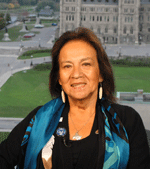
Jeannette Corbiere Lavell.
(Photo: NWAC)
|
Based on the Canadian experience, the Native Women's Association (NWAC), the Feminist Alliance for International Action (FAFIA, member of the Social Watch national coalition) and other organizations stated this month at the UN Permanent Forum on Indigenous Issues that all governments should “immediately develop and implement a national strategy to address the disadvantaged social and economic conditions of Aboriginal women and girls, including poverty, inadequate housing, low educational attainment, inadequate child welfare policies, and over-criminalization”.
|
Published on Wed, 2012-05-02 08:43
Throughout the 2008-2010 financial crisis, Canadian banks were touted by the government and the banks themselves as being very stable and that they needed no bailout. However, in reality, Canada’s banks received billions in cash and loan support during the 2008-2010 financial crisis—and the government has remained resolutely secretive about the details, according to a study released this week by the Canadian Centre for Policy Alternatives (CCPA, one of the focal points of Social Watch in that country).
|
Published on Mon, 2012-04-09 13:14
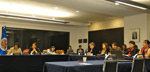
The 144th Session of the
Inter-American Commission on
Human Rights. (Photo: HRBrief)
|
Over the last 30 years, more than 600 aboriginal woman and girls have been murdered or gone missing in Canada. The Inter-American Commission on Human Rights (IACHR) addressed this issue for the first time following a petition by Native Women’s Association of Canada (NWAC), the Canadian Feminist Alliance for International Action (FAFIA, one of the focal points of Social Watch in that country) and the University of Miami’s Human Rights Clinic.
|
Published on Tue, 2012-03-20 08:35
With the release of its annual Alternative Federal Budget, the Canadian Centre for Policy Alternatives (CCPA) urges the federal government to table a detailed budget that restores Canadians’ trust in the economy, public institutions, and democracy.
The proposal launched by the CCPA, one of the national focal points of Social Watch in the North American country, addresses the concerns of mainstream Canada by putting forward a public investment plan that promotes a better quality of life for all Canadians, not just an elite few.
|
Published on Thu, 2012-03-15 11:14
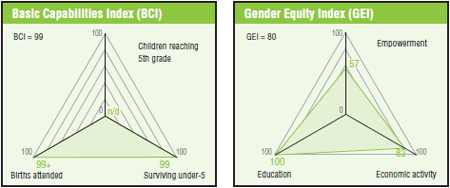
In terms of gender equity Canada is ranked ninth among 154 countries, far above its neighbour United States and below several European nations, New Zealand and a developing nation, Mongolia. However, her relatively good performance is not enough to narrow the gap between men and women to an acceptable level.
|
Published on Mon, 2012-03-12 08:43
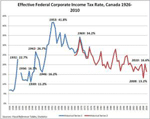
Corporate income tax rate in
Canada: 1926-2010.
(Source: The Globe and Mail)
|
“In Canada, federal taxes on profits had fallen to 16.6 per cent by fiscal 2010-11 after briefly dipping to 13.2 per cent in 2008, a level not seen since the Great Depression,” wile corporate profits “have rebounded since the 2008-9 crisis, nearing the previous high water mark,” wrote Armine Yalnizyan, senior economist at the Canadian Centre for Policy Alternatives (CCPA), one of the focal points of Social Watch in the North American country.
|
Published on Mon, 2012-03-05 08:14
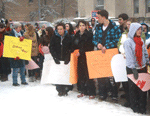
Photos of missing and murdered
aboriginal women lent a somber
presence to the three-day
Assembly in Vancouver. (Photo:
Viveca Ellis/The Epoch Times)
|
With the Missing Women’s Inquiry ongoing in Vancouver, a Canadian national forum aimed at improving the security and safety of First Nations communities couldn’t have come at a more opportune time last month, wrote journalist Viveca Ellis on an article published by The Epoch Times international media network.
|
Published on Mon, 2012-02-06 07:50

Jim Stanford, (Photo: CAW/TCA)
|
Political leaders boast that the Canadian economy has fully recovered from the recession, and that it was not as severe there as it was in other countries. It turns out that both of those claims are false because they don't take population growth into consideration, according to a study released by the Canadian Centre for Policy Alternatives (CCPA, one of the focal points of Social Watch)
|
Published on Fri, 2012-01-27 07:20

Postal strike in Vancouver.
(Photo: Guilhem Vellut/Flickr/CC)
|
Federal cutbacks announced in the 2010 and 2011 budgets will result in more than 60,000 job losses, says a study released today by the Canadian Centre for Policy Alternatives (CCPA, one of the focal points of Social Watch in that country). Any additional cuts in the upcoming federal budget would result in even more job losses.
|
Published on Tue, 2012-01-10 14:10

The CCPA's website shows by the cent
the income of the CEO Elite 100 and the
average workers' earning since January 1st.
|
On January 3rd at 12.00 o’clock, each one of the “CEO Elite 100” —the best paid executives of companies listed in the Toronto Stock Exchange— had already got 44,366 dollars, the amount that an average Canadian wage earner would obtain after working full-time the entire year, revealed the CCPA, one of the members of Social Watch in that country. To make the inequity even worst, only one woman is member of this privileged club
|
Published on Thu, 2011-12-15 08:27
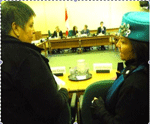
Jeannette Corbiere Lavel and
Sharon Donna McIvor.
(Photo: FAFIA)
|
The UN Committee on the Elimination of Discrimination against Women decided to conduct an inquiry into the murders and disappearances of Aboriginal women and girls across Canada. The decision was announced this week by Jeannette Corbiere Lavell, President of the Native Women’s Association of Canada (NWAC), and Sharon McIvor, of the Canadian Feminist Alliance for International Action (FAFIA, focal point of Social Watch in that North American country).
|
Published on Thu, 2011-12-01 08:46

Strathcona refinery in Vancouver.
(Photo: Imperial Oil)
|
Greenhouse gas emissions embodied in Canadian exports of fossil fuels in 2009 were 15% greater than the emissions from all fossil fuel combustion within that North American country, and almost four times the emissions from extracting and processing fossil fuels in its territory, according to a study released this week by the Canadian Centre for Policy Alternatives (CCPA).
|
Published on Wed, 2011-11-16 08:06

Marc Lee. (Photo: CCPA)
|
The richest 20% of Canadian income earners are responsible for almost double (1.8 times) the greenhouse gas (GHG) emissions of those in the lowest income group, says a new study released this week by in Ottawa by the Canadian Centre for Policy Alternatives (CCPA), one of the focal points of Social Watch in that North American country.
|
Published on Wed, 2011-10-05 09:13
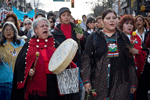
March in honour of Canadian
murdered and missing native women
in Vancouver.
(Photo: Nofutureface/Flickr)
|
The Sisters in Spirit, part of the Native Women’s Association of Canada, dedicated this Tuesday, like every Oct. 4 since 2005, as a day of vigil to honour the lives of missing and murdered Aboriginal women and girls, with rallies and other events in nine provinces including Ontario, Alberta, British Columbia, Quebec and Nova Scotia as well as the Northwest Territories.
|
Published on Thu, 2011-09-29 12:57
|
Poor people waiting for a meal
in New Brunswick.
(Photo; OldMaison.)
|
Poverty costs tax-payers of the eastern province of New Brunswick more than $2 billion (some U$S 1,9 billion) a year, according to a report released Tuesday by the Common Front for Social Justice and the Canadian Centre for Policy Alternatives, one of the focal points of Social Watch in the North American country.
|
Published on Thu, 2011-09-01 07:23

University of Toronto. (Photo:
Crown International Education)
|
Sources: Market Wire, CCPA
Ontario's system of financing higher education is becoming less equitable and more regressive for families, says a study released this week by the Canadian Centre for Policy Alternatives (CCPA, one of the focal points of Social Watch in this North American country).
|
Published on Thu, 2011-07-14 09:24

Economist Armine Yalnizyan.
(Photo: Canadian Centre for
Policy Alternatives)
|
Source: The Star.
Income inequality in Canada is widening as the rich get richer while poor and middle-income people lose ground, says the Conference Board of Canada in a report released Wednesday, according to The Star newspaper.
“While the poor are minimally better off in an absolute sense, they are significantly worse off in a relative sense. And where is the middle-class in all of this? These are important questions for society,” said board president Anne Golden in an interview.
The 33-year trend which has accelerated since 1993 raises questions about the country’s economic well-being, including whether Canada is using all the skills and talents of its citizens and whether social cohesion and fairness are being undermined, says the report titled "How Canada Performs: Is Canada becoming more unequal?"
|
Published on Fri, 2011-07-01 11:48
Sources: Canadian Centre for Policy Alternatives, Winnipeg Free Press.
Privatizing Manitoba Hydro, electric power and natural gas utility owned by the government of the Canadian province of Manitoba, would result in soaring power rates, job losses and the handover of an essential service to wealthy, out-of-province owners, union leaders warned this week quoting a report publisheb by the Canadian Centre for Policy Alternatives (CCPA), a focal point of Social Watch.
|
Published on Fri, 2011-06-03 10:23
Sources NSI-INS
Agenda
The North-South Institute (NSI, focal point of Social Watch in Canada), with support from the Canadian International Development Agency (CIDA), has convened the 2011 NSI Forum, that will take place in Ottawa on Monday 20th and Tuesday 21st under the title “The Future of Multilateral Development Cooperation in a Changing Global Order”.
|
Published on Thu, 2011-05-05 08:07

Photo: Deb Ransom, Canada government
|
A recent report coordinated by the Canadian Labour Congress (CLC) and Canadian Feminist Alliance for International Action (FAFIA) highlights the sharp decrease in support for women’s issues under the Stephen Harper government, whose Conservative Party's won its first legislative majority since 1988 on Monday, assuring his re-election.
|
Published on Mon, 2011-04-25 07:41
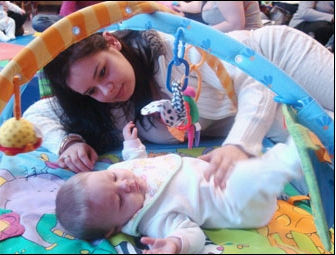
St. Mary's Home for maternal
services in Ottawa
(Photo: Nancy MacNider) |
Source: Canadian Feminist Alliance for International Action (FAFIA)
Women in Boznia and Herzegovia now have a greater chance of surviving childbirth than women in Canada, according to the Feminist Alliance for International Action (FAFIA), focal point of Social Watch in that North American country.
|
Published on Mon, 2009-10-26 07:15
After September’s G-20 Summit in Pittsburgh, USA (detailed in the “News” section of this e-bulletin), the next meeting of this elite global club is scheduled to take place in Huntsville, Canada in June 2010. “Spotlight On…” will also turn its gaze to that North American country, with this month’s profile focused on Social Watch Canada.
|
|
Source: 
. Published on Thu, 2009-03-19 17:01
|
Published on Wed, 2008-07-02 11:03
Next Friday, February 1, 2008, the North-South Institute, the Canadian Centre for Policy Alternatives and the Canadian Feminist Alliance for International Action (FAFIA) will be launching the Canadian chapter of the international report Social Watch Report 2007: in dignity and rights.
|
Published on Tue, 2007-04-24 13:16
The Conference will be a unique opportunity to explore the ways in which a human rights framework can inform new strategies for trade, development and the eradication of poverty.
|
|
Source: 
. Published on Tue, 2006-08-08 10:48
|
|