Lebanon
Lebanon Economic Vision and Capital Investment Plan: “new” path for development?
Published on Tue, 2020-10-06 00:00
More than 500 organisations and academics from 87 countries have issued a statement today calling on the International Monetary Fund (IMF) to stop promoting austerity and instead support policies that advance gender justice, reduce inequality, and put people and planet first.
The IMF has already begun locking some countries into long term austerity-conditioned loans, while encouraging countries to take such recovery measures through its short-term, front loaded emergency financing packages. Such policies will further entrench gender and economic inequality and undermine any chance of an inclusive recovery, especially as many countries in the Global South are expected to need more long-term financing in the near future.
|
Published on Mon, 2020-10-05 00:00
We are please to invite to attend their join side event during the Civil Society Policy Forum at the 2020 IMF-WB Annual Meetings, entitled: “The Role of IFIs in a World of Intersecting Conflicts and Crises”.
This session will assess IFIs’ policies in contexts of crises and conflicts, mainly in the Arab region, by examining the existing policies and their impact on inequality. It aims also to look into countries with ongoing IMF negotiations, in light of country specific contexts, such as the economic failure in Lebanon and the inability to negotiate, and the case of emergency lending in Egypt. Finally, it will assess IMF policies on a regional level as they relate to the effect of the pandemic.
|
Published on Tue, 2020-09-15 10:59
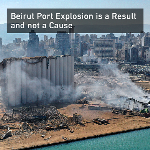
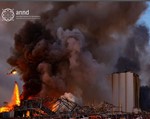
The explosion on the 4th of August was heard in Cyprus and felt in Jordan, where it registered an earthquake of 4.4 magnitude. It was considered the third strongest explosion after Hiroshima and Nagasaki. It was a result of several factors, which could be seen as a precursor and a cause.
First was the stifling economic crisis that began in the summer of 2016, but worsened in the summer of 2019. Lebanon began to suffer from a deficit in the budget, the treasury, and the balance of payments.
|
Published on Thu, 2020-08-13 14:35
Statement prepared by Lebanese CSOs after Beirut’s Explosion, the statement is addressed to International Organizations, the United Nations Agencies and International Partners.
On August 4, 2020, Beirut was hit by the biggest explosion in its history, leading to more than 200 killed, seven thousand wounded, and tens of missing (according to the latest figures by the Ministry of Public Health) before the Lebanese army announced that it would stop the search for the missing in addition to causing disabilities and increasing the suffering of people with disabilities in general.
|
Published on Thu, 2020-05-14 12:11
The COVID-19 health crisis added to the multidimensional crises in the Arab region and their manifestation in conflicts, wars, economic and social inequalities, and the increasing number of refugees and migrants. It could lead to severe repercussions at the economic, social, and political levels. According to an ESCWA preliminary estimate, the region will lose at least USD42 billion in 2020 due to the Corona pandemic. ESCWA also considered that the global spread of the virus and the growing impact of low oil prices could aggravate income losses. Unemployment is expected to increase by 1.2 percentage points, meaning the loss of around 1.7 million jobs. The Arab region registers some of the highest rates of inequality around the world, and informal employment accounts for 50% of jobs. It also lacks universal social protection systems and is thus unable to protect workers and ensure their dignity during work stoppages.
|
Published on Thu, 2020-04-23 09:33
Ziad Abdel Samad
Arab NGO Network for Development (ANND)
Never has the world witnessed such a state of panic, not even in world wars, where vast areas remained relatively safe. But the current Corona epidemic seems like a state of global war that will not exclude anyone or any region of this planet. Countries have closed their borders and airports, stopped their railways, and reduced the movement of shipping. Regions inside the same state were isolated and citizens voluntarily quarantined in an unprecedented manner. Distance education has become the way to complete the academic year, depending on the infrastructure required to communicate via the Internet and appropriate applications.
|
Published on Sun, 2020-04-12 00:00
Civil Society Organizations and Research Center in Lebanon released a statement in reaction to the Government response to the Covid 19 crisis.
The suggestions and recommendations stem from the need to take a comprehensive approach to the crisis with its health, economic and social dimensions, with human rights and dignity at the center of the approach taken, and learn from this crisis in order to develop plans that strengthen public health care systems, free education and public access to social security.
|
Published on Fri, 2020-02-07 08:56
The formation of the new Lebanese government on 21 January 2020, nearly one hundred days after the eruption of the popular protests, is an important milestone in the first stage of the confrontation between the “revolution” and the authorities. This has raised questions and discussions among activists and groups whether the revolution has made progress, or the formation of the government constitutes a return to the bottom, to pre 17 October period.
So what has the revolution achieved against the regime?
Indeed, the revolution has had accomplishments on two levels, the authorities’ and popular levels.
|
Published on Tue, 2020-02-04 22:27
Arab NGO Network for Development (ANND) issues a statement on the ‘Deal of the Century’ and recalls that an immediate end to Israeli occupation and the recognition of the universal, indivisible and inalienable Palestinian Rights are the foundations of a sustainable Peace in the Middle East.
On January 28th, 2020 the Middle East Peace Plan known as the Deal of the Century was presented by the US President Donald Trump in Washington DC. A “peace” plan that was built unilaterally and that considers the Israeli occupation as the exclusive partner. The “peace” plan markets an illusion of peace at the expense of Palestinian people’s rights and dignity. It gives further impunity to all human rights violations committed by the Israeli occupation, including through legalizing illegal Israeli settlements.
|
Published on Thu, 2019-11-21 14:00
Wicked Politics and Shaken Socio-Economy
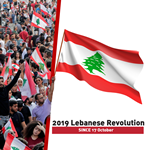
Since 17 October 2019, Lebanon has been witnessing a massive wave of unprecedented nationwide protests, which are deemed tomarka new era in its history. These protests are motivated by the direct repercussions of the economic and monetary crisis on the Lebanese population, but are indeed rooted in a structurally flawed economic system and wicked political practices and corruption embraced by the successive governments for decades. The protests ar widespread across the country and remain non-sectarian, marking the biggest postwar civil movement, as the Lebanese people overcome their religious and political divergences and join forces in an attempt to achieve real change. This change was long awaited by the Lebanese, and the civil society specifically that has been for years trying to promote partnerships and engage in policy making at different levels, despite the lack of serious and effective channels.
|
Published on Thu, 2019-11-07 16:41
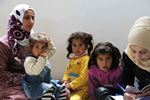
Photo: UNHCR/F.Juez
|
The official Lebanese VNR report of 2018 blames the Syria crisis for the economic deficits that increased the debt, as well as for economic stagnation, the doubling of unemployment and worsening poverty rates. Yet, according to the alternative civil society report by the Arab NGO Network for Development (ANND), “this exclusively negative narrative about Syrian refugees does not distinguish between the huge impact of the Syrian crisis/war on the economy and political situation in Lebanon, and the diversified impact of the presence of the Syrian refugees in Lebanon. This latter allowed financial flow of aids to increase, as well as the domestic consumption that produced around 1 -1.5 percent of GDP growth, and provided a cheap labour force that prevented the bankruptcy of many small businesses.”
|
Published on Mon, 2019-09-16 11:23
Arab NGO Network for Development (ANND) hosts an electronic platform to share information and reports on the progress in the implementation of the Agenda 2030 for Sustainable Development issued by CSOs in the Arab Region.
|
Published on Mon, 2019-09-02 14:57
The right to food is a priority at the global level, and especially in the Arab region where countries with heightened armed conflicts as Syria, Yemen, Iraq and Palestine suffer from severe malnutrition. And yet, conflicts are not the only reason behind the deterioration in the food situation, because it is primarily due to the social and economic policies adopted, as well as climate change and change in production and consumption patterns. In fact, these policies have had a significant impact on small producers and rural populations.
To better understand the setbacks for the right to food, the Arab Watch Report 2019 raises these concerns through 10 national and six regional papers, which all adopt an all-encompassing approach to the right to food and its aspects.
|
Published on Fri, 2019-02-08 19:04
Lebanon presents an interesting case when it comes to social policy. In fact, when the developmental state model was being implemented all over the world, Lebanon was adamant in its laissez-faire economy. The developmental state has brought about welfare regimes and what was called welfare states in advanced capitalist economies in Europe. In parallel, except for a few years, Lebanon has opted for minimal state intervention in public policy, and social protection in general. This has been exacerbated in the reconstruction period where the private sector and non-state actors dominated the realms of social services and protection, such as health and education. In recent years, and with social protection gaining momentum on the international level, the discussion on social protection and social security resurfaced in Lebanon. This has been accentuated as studies and reports on alarming poverty rates, inequality and unemployment in the country became recurrent.
|
Published on Wed, 2018-08-29 13:48
Lebanon participated in the Voluntary National Review (VNR) at the High Level Political Forum (HLPF) 2018, presented its progress report towards achieving sustainable development, and had its Q&A session on July 18th, 2018, at the UN Headquarters in New York.
These comments, drafted by a group of civil society organizations, are intended as a contribution to the dialogue on the harmony between Lebanon’s international commitments to international institutions and donors, on one hand, and the achievement of SDGs, social justice, and equality, on the other.
|
Published on Mon, 2018-07-16 00:00
The experience of Voluntary National Reviews and of Civil Society shadow (or spotlight) reporting.
How it is key for meaningful participation and accountability
The side event "SDG Implementation at National Level: What’s the Point of National Reports?" was held on July 17 in New York, during the meeting of the High Level Political Forum of the UN. The debate focused on voluntary national reports (VNRs) and parallel “shadow” or “spotlight” reports generated by civil society organizations (CSOs) on progress towards the Sustainable Development Goals (SDGs).
|
Published on Mon, 2017-11-27 13:03
|
Photo: UNHCR/F.Juez
|
Achieving sustainable development in Lebanon requires addressing the root causes of Lebanon’s structural problems at political, economic and social levels and, additionally, to address the challenges presented by the huge influx of Syrian refugees in the country. The refugee crisis sheds light on the structural and systemic problems of Lebanon and aggravates them. In this context, the private sector, as in many other countries, must play an active role in achieving SDGs in Lebanon, along with other development actors. At the same time, they all should remain accountable for their contribution to sustainable development.
|
Published on Fri, 2017-11-03 11:31
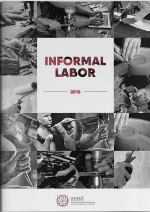
A recently launched report by the Arab NGO Network for Development aims at defining the gender dimensions of informal labor in the region. The study on the gender dimensions of informal labor, written by Dr. Howaida Adly, Political Sciences Professor at the National Center for Sociological and Criminilogical Research (Egypt), focus on commonalities between all Arab countries in terms of labor and gender, and on the differences among them. The analysis is based on national reports received from the different Arab countries. A common limitation is that data is lacking to allow for a comprehensive assessment of the gender dimensions of informal labor.
|
Published on Wed, 2017-09-27 15:09
The Arab NGO Network for Development (ANND) launched a book on the enabling environment of civil society in the Arab region. The publication aims to present an overview of the current situation of civil society organizations in Tunisia, Egypt, Lebanon, Iraq, Syria, and Palestine. It uses several country-specific indicators regarding the establishment of civil society organizations and their success. The current conflicts raging in the Arab region constitutes a serious challenge, especially in lack of attention to laws regarding the work of civil associations, in addition to the shifts faced in funding.
The publication highlights several legal challenges, especially those resulting from the lack of commitment to the principles of the separation of powers, as applied by democratic societies, as laws and regulations are often politicized. The book includes several recommendations to invigorate the work of civil society organizations in the regional, in order to consolidate the values of justice, equality, and sustainable development.
|
Published on Thu, 2017-08-31 12:30
Following 8 days involving 43 Voluntary National reviews (VNR) and 147 side events with 77 ministry-level participations and 2458 registered stakeholder representatives, the statistical outlook of the 2017 High-Level Political Forum on Sustainable Development Goals is quite promising. It is only the second review and just two years after the kick-off for the implementation of a universal agenda towards leaving no-one behind. Yet, time is marching on and there is a long way to go on the level of implementation.
At the 2017 HLPF, Jordan became the third country from the Arab region to participate in the VNR process; following Egypt and Morocco in the 2016 review. The first words of Jordan’s national report made reference to the same issues: ‘the power of working together’ and taking into consideration ‘the urgent world issues’.
|
Published on Fri, 2017-05-12 15:43
“Informal labor is not a marginal issue in Arab countries. It is a core component of modern Arab economies and the distribution of work therein and is doomed to expand under current policies,” explained Samir Aita, lead researcher of the Arab NGO Network on Development (ANND) at the launch of the 2017 edition of the Arab Watch on Economic and Social Rights, last May 8 in Beirut.
The report, launched publicly at the American University, concludes that the “highest percentages of lack of formality are in countries with the least strict laws and bureaucracies, and vice versa. This goes against the stereotype that says that informality is a result of strict laws and bureaucracies.” It also concludes that “informal labor in Arab countries is mostly waged labor, except in rare cases, which contradicts another idea that says that informal labor is a choice, as young people entering the job market have no choice but to find any type of livelihood, no matter how fragile or temporary.”
|
Published on Thu, 2016-11-10 21:43
A region overwhelmed by violence and conflicts* Moreover, the realities of women in the Arab region are influenced, directly or indirectly, by the recurrence of conflicts, including state crisis, wars, occupation, and the onslaught of religious fundamentalism and militarized religious extremist group. While the implications on rights and broader political, social, and economic realities differ in these circumstances, they all leave women subjected to various forms of violence and exclusions. It is not expected that the region will be free of these cycles of conflict and violence in the short term; thus the manifestation of this violence will inevitably continue shaping the lives of women and men living in the region.
|
Published on Thu, 2016-09-08 20:24
Photo: UNHCR/S. Malkawi
|
Several challenges hinder the implementation of the 2030 Agenda on Sustainable Development in Lebanon. During the UN Conference on Sustainable Development in September 2014 Lebanese President Tammam Salam identified the humanitarian issues caused by the Syrian refugee crisis as one of the greatest challenges to development. It is indeed a significant constraint; yet, one should note that Lebanon was facing a political and socio-economic crisis reflected by a high rate of unemployment and marginalized people, even before the Syrian crisis and the flood of refugees. Therefore, it is worth highlighting that the Syrian war shed light on the structural and systemic problems of Lebanon and aggravated them.
To date, Lebanon does not have a national strategy for sustainable development nor a national economic plan nor a poverty reduction strategy. According to the 2014 International Parliamentary Union Secretary General’s annual report: “the Lebanese Parliament reported that the Sustainable Development Initiative was in the agenda of the Public Work Committee between 2009-2010 period. The current political instabilities, however, forced the Parliament to shift its priorities.” The same report indicates that the Parliament has not been informed of the Sustainable Development Goals (SDGs) and has not taken any steps to discuss them.
|
Published on Thu, 2016-09-08 19:17
Arab NGO Network for Development (ANND) held a seminar to discuss issues related to Business and Human Rights in the context of the Pilot Project for the Promotion of Social Dialogue in the Southern Mediterranean Region.
|
Published on Thu, 2016-09-08 18:34
In the context of the Pilot Project for the Promotion of Social Dialogue in the Southern Mediterranean Region (SOLiD), in partnership with the International Trade Union Confederation (ITUC) and BUSINESSMED, ANND held a two day seminar in Beirut on 7 and 8 September 2016, to discuss issues related to Business and Human Rights.
Roberto Bissio, Social Watch Coordinator, joined the workshop participating in Session 1, The privet Sector and the New Development Paradigm - A Rights Based Perspective, Financing for Development from a Rights Based Approach (see his intervention below).
|
Published on Fri, 2016-04-22 12:15
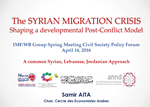
This paper discusses the newly issued World Bank report on the welfare of the Syrian refugees in Lebanon and Jordan, based on the analysis of UNHCR data. It points some significant aspects not addressed, especially the effects Syrian pre-crisis public policies. It highlights the gap between the lack of proper socioeconomic assessment of both refugees’ and hosting communities and the fact that resilience and integration policies are already been negotiated with the Lebanese and Jordanian governments. This is while there no such efforts dealing with Egypt, Iraq and mainly Turkey, who are receiving large numbers of refugees. In addition, the Civil Society organizations are channeling a large share of the humanitarian aid, while they have, as well as the Syrian refugees’ and hosting communities, no proper voice in the debate.
|
Published on Mon, 2016-04-11 10:59
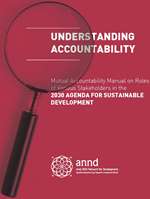
Arab NGO Network for Development (ANND) releases the Mutual Accountability Manual on the roles of Different Stakeholders in the 2030 Agenda for Sustainable Development. This guide provides assisting tools for the civil society to play its role within the framework of accountability of the parties concerned with the developmental process, from the public sector as a key partner in the development process and its basic point of reference in the context of policy-making and ensuring the proper implementation and protection of the rights of the citizens, to the private sector as a partner who is supposed to adhere to international standards of human rights, and the donors who are committed to providing the necessary resources for the implementation of the development process and achieving the goals of civil society.
|
Published on Thu, 2016-03-24 10:44
Freedom of association is an enabling right that underpins inclusive development. The social movements that have flooded the streets of the Arab Spring have the potential to democratize the state and secure democratic transition. However, what Europe calls "Southern Neighbouring" countries are recording alarming shrinking space for civil society, violations of freedom of association and peaceful assembly, coupled with restrictions of the right to access to information and challenges in mobilizing financial resources.
|
Published on Mon, 2015-11-16 13:59
During the 23rd Working Group session of the Universal Periodic Review the situation of human rights in Lebanon were reviewed by the UN member states. During the interactive dialogue several member states directed recommendations to Lebanese Delegation headed by Permanent Representative of Lebanon to UN Mission in Geneva Mrs. Najla Riachi Assaker on the issues of women’s rights, torture, migrant workers, establishment of a moratorium on the death penalty.
Three and a half hour session provided the occasion for both national delegation representatives and the UN Member states to shed light on the ‘extraordinary challenges’ the country is facing, namely the Syrian crisis and the terrorism in the neighbourhood. Unfortunately as civil society groups engaged in the UPR process and working on issues of human rights and development, we believe that these challenges cannot be ‘excuses’ for non-implementation of recommendations accepted back in 2010 and in overall providing maximum available resources for ensuring the full enjoyment of human rights in the country.
|
Published on Wed, 2015-11-11 15:00
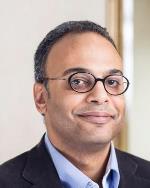
The arbitrary detention of Hossam Bahgat, (the founder of the Egyptian Initiative for Personal Rights, an independent Egyptian human rights organization and a journalist at Mada Masr, an online news site), on November 9th, 2015 is a mere reflection of the crackdown on civil rights in Egypt and the grim truth about the restricted enjoyment of the ‘’freedom’’ of expression and opinion in the country, that is essentially guaranteed by the Egyptian Constitution Article 651 and Article 19th of the International Covenant on Civil and Political Rights, that Egypt is party to.
|
Published on Thu, 2015-10-08 19:32
The outcome reached by the international track of sustainable development objectives amounts to a dangerous twist in the concept of development, especially in terms of determining the roles of stakeholders in the development process. For example, it proposes giving the business sector the key role, being a contributor to job-generating growth. This comes before the adoption of “business-binding human rights standards.”
|
Published on Tue, 2015-08-18 00:00
The Arab NGO Network for Development (ANND) hosted a meeting on Tuesday August 18, 2015 with Mr. Leonardo SC Castilho, a Human Rights Officer from the Office of the High Commissioner for Human Rights for the United Nations in New York.
The meeting comes in the lead up to the UN General Assembly in New York in September – where Sustainable Development goals (SDGs) will be adopted – and a month after the Addis Ababa Conference on Financing for Development (FfD III).
The meeting oversaw an interactive discussion between various Lebanese organizations and the representatives from OHCHR on the outcome document of the United Nations Summit for the adoption of the post-2015 development agenda.
|
Published on Fri, 2015-07-03 13:26
The peoples’ uprisings in the Arab region presented a golden occasion for revisiting the European Neighborhood Policy (ENP) and particularly the partnership between the Arab countries and the European Union (EU). The Joint Communication of the High Representative and European Commission, “A New Response to a Changing Neighborhood, ” highlighted important lessons learnt but remained an exercise of self-assessment without the engagement of EU partners and relevant stakeholders (including civil society) for what are widely considered today as major historical changes in the Arab countries.
|
Published on Thu, 2015-05-07 19:33
In the eve of an official regional forum on sustainable development, the Arab citizen organizations proposed alternative strategies. The NGO Network for Development (ANND), in collaboration with the Economic and Social Commission for Western Asia (ESCWA) and with the participation of the Civil Society Division in the League of Arab States, spelled out policy alternatives and submitted them to the governments. Read here the "Alternative Development Strategies for Post-2015: Exit from the Current Policy Approach".
|
Published on Mon, 2015-02-09 11:16
Photo: ANND.
|
The Arab NGO Network for Development (ANND) organized, in cooperation with the CSO Partnership for Development Effectiveness, a sub-regional workshop held in Beirut, Lebanon on January 24 and 25, 2015 for the Levant states. This workshop, aimed to assess and determine the mechanisms and prospects of accountability for the various parties involved in development, be they governments, donors, civil society organizations or the newcomer, i.e. the private sector. Sessions focused on two issues, accountability and the civil society working.
The workshop was attended by representatives of organizations from Lebanon, Syria, Jordan, Bahrain, Iraq and Palestine.
|
Published on Tue, 2014-12-23 09:28
For the fourth successive year, a delegation of human rights and development civil society organizations from the Arab region will be visiting the European institutions in Brussels between the 8th and the 12th of December 2014. The Arab delegation includes civil society representatives from Egypt, Jordan, Palestine, Morocco, Syria, Tunisia and Lebanon.
This visit seeks to provide a platform for dialogue and exchange between civil society organizations from the Arab region and European policy makers at the Parliament and Commission around the EU’s support and involvement in the region.
|
Published on Fri, 2014-11-21 12:35
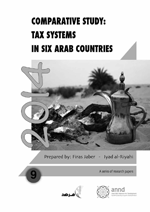
The Arab NGO Network for Development (ANND), in collaboration with Christian Aid and Social and Economics Policy Monitor Palestine, explore in their comparative study on “Tax Systems in Six Arab Countries” how the tax systems of Arab countries have contributed to the lack of opportunity, growing inequalities, marginalization and exclusion suffered by the majority of people living in the Arab region. The revolutions witnessed by some countries in the region and the instability and crises in others are in part a demonstration of the people’s rejection of these inherent structural disparities. Paradoxically, as the report shows, it is the tax policies of these countries that present one of the key means by which local resources could be redistributed and mobilized to restore socio-economic justice to the poor and to foster more self-reliant development.
|
Published on Thu, 2014-06-12 21:46
The Arab NGO Network for Development (ANND) hosted the European Investment Bank (EIB) Vice President, Mr. Philippe de Fontaine Vive along with a team of EIB staff and representatives of the EU delegation to Lebanon on June 10th. The meeting brought together representatives of Lebanese Civil Society and international organizations working in Lebanon. ANND's work and monitoring of the EIB's involvement in the region prompted such a meeting.
Since 2005, we could see a change in the EIB policies, which has chosen as interlocutor private local banks with three different measures. The first one enters in the micro-credit process to "facilitate households' access to credit", the second one consists in the implementation of private investment funds for the SMEs and the last one consists to negotiate directly with the local private banks on projects to finance SMEs from specific sectors.
|
Published on Thu, 2014-05-15 09:21
Gustave Assah.
|
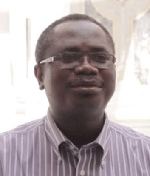
The participants in the civil society strategy meeting on monitoring and accountability organized by Social Watch last february in Montevideo were asked about how they personally work and relate with the huge task of making the powerful accountable. Here is what they said:
|
Published on Thu, 2013-10-10 14:29
|
Photo: UNHCR/S. Malkawi
|
One cannot discuss policy priorities and challenges in Lebanon without first addressing the dangerous developments the region is currently experiencing. Oppression, backwardness and the shortcomings of democracy in the region as a whole are serious hindrances that could turn the tide and reverse the more positive trends. Despite the challenges they raise, the current developments clearly demonstrate the potential for change in the region: people are no longer willing to stand idle in the face of tyranny, poverty, unemployment and marginalization.
Lebanon is still facing the systemic challenges of the political confessional system. The state must be an institutional and constitutional expression of democracy and people’s rights. Genuine citizenship cannot be achieved without the rule of law, without a system that gives citizens their rights and duties towards both society and the state, which are also preconditions for an effective civil society. Thus the main obstacle to true citizenship in the country is still the partition of state offices and institutions among the different religious confessions.
|
Published on Mon, 2013-09-02 09:16
The political stalemate continues in Egypt; the dismissal of the Rabeaa and Al‐Nahda sit‐ins was one of its bloodiest events. Although many players are keen to protect the Egyptian state, safeguard its persistence and support its role, efforts are still required on all fronts, including the international front, to reach effective and permanent solutions s that respect human rights and allow for a resumption of the transitional political process. This process includes promulgating a new constitution that meets the aspirations of all Egyptians s of all factions and affiliations and making conditions suitable for holding fair, democratic and unchallengeable elections. This will guarantee the right of Egyptian men and women to decide a future for them and for their representative institutions. The Arab NGO Network for Development (ANND), Beirut released a statement on August 27, 2013.
|
Published on Thu, 2012-03-15 11:39
In terms of gender equity Lebanon is above the Middle East and North African average, and also above neighbouring Syria, although in worst situation than Israel, which bares the best score in the region.
|
Published on Wed, 2010-07-07 13:24
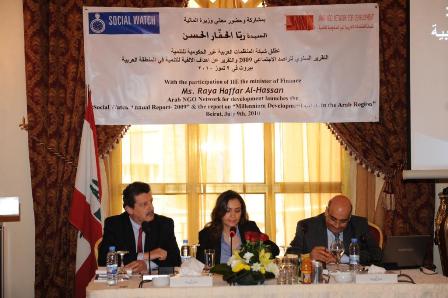 “Poverty eradication and women empowerment are our priorities” said Lebanese minister of Finance, Raya Haffar Al-Hassan at the joint launch of the Social Watch report in Arabic and the Arab Assessment of the Millennium Development Goals that took place in Beirut on July 9. Speaking in Behalf of the Arab NGO Network for Development, Ziad Abdel Samad welcomed the minister as “one of us”, remembering her past association with civil society organizations and with the United Nations system, for which she worked before joining the government. He welcomed the public discussion of the budget that is currently happening “for the first time in Lebanon” and challenged the minister to go one step further and invite civil society organizations to actually participate in the elaboration of future budgets. “Poverty eradication and women empowerment are our priorities” said Lebanese minister of Finance, Raya Haffar Al-Hassan at the joint launch of the Social Watch report in Arabic and the Arab Assessment of the Millennium Development Goals that took place in Beirut on July 9. Speaking in Behalf of the Arab NGO Network for Development, Ziad Abdel Samad welcomed the minister as “one of us”, remembering her past association with civil society organizations and with the United Nations system, for which she worked before joining the government. He welcomed the public discussion of the budget that is currently happening “for the first time in Lebanon” and challenged the minister to go one step further and invite civil society organizations to actually participate in the elaboration of future budgets.
|
|
Source: 
. Published on Wed, 2009-12-09 10:01
Auteur:
By Matern Boeselager
|
Source: Arab NGO Network for Development (ANND). Published on Tue, 2006-08-29 17:26
A group of Lebanese CSOs will deliver to Kofi Annan, UN General Secretary, a letter during his visit to Lebanon and the region.
|
Published on Tue, 2006-08-29 16:58
Civil society groups from around the world are increasingly raising their voices for an immediate cease-fire. The Arab NGO Network for Development (ANND), the regional focal point of Social Watch in the Arab world, has issued from Beirut the following updates on the situation.
|
Source: Amnesty International. Published on Thu, 2006-08-24 16:14
Amnesty International published findings that point to an Israeli policy of deliberate destruction of Lebanese civilian infrastructure, which included war crimes, during the recent conflict.
|
Source: Arab NGO Network for Development (ANND). Published on Mon, 2006-07-31 11:47
Today, July 30th, another massacre was committed in Lebanon: More than sixty civilians, among them 37 children, were killed by Israeli bombs while they were sleeping in shelters in the village of Qana. They died not very far away from the mass grave holding the bodies of 106 civilians burned by a previous Israeli attack in April 1996 inside a shelter provided by a UN battalion.
|
Source: Arab NGO Network for Development (ANND). Published on Mon, 2006-07-31 11:41
A number of Lebanese, Arab and international organizations held a meeting on July 15, 2006 to discuss the current situation in Lebanon.
|
Source: Human Rights Watch. Published on Mon, 2006-07-31 11:24
Press release issued by Human Rights Watch on July 30, 2006. It calls on the UN to establish an international commission of inquiry and states that Israel’s consistent failure to distinguish combatants and civilians is a war crime. Please note that we will be releasing an extensive report documenting civilian casualties in Lebanon from IDF attacks over the first two week's of the conflict this Tuesday or Wednesday.
|
|
Published on Mon, 2006-07-31 10:50
|
|
Source: Arab NGO Network for Development (ANND) . Published on Wed, 2005-05-11 14:57
The Arab NGO Network for Development (ANND) organised a press conference for the launching of the Arabic edition of the Social Watch 2004 Annual Report at the Flamenco Hotel in Cairo, the 11 of May 2005. Representatives of various Arab Civil Society Organizations, from 14 Arab countries: Lebanon, Palestine, Iraq, Jordan, Yemen, Bahrain, Sudan, Morocco, Tunis, Algeria, Syria, Kuwait, Saudi Arabia and Egypt will attend the press conference.
|
Source: Arab NGO Network for Development (ANND). Published on Wed, 2004-12-01 16:38
Like every year at the same period of time, the «Committee of the Parents of the Kidnapped and Missing Persons in Lebanon» works on popularizing its action, breaking the isolation to which the authorities try to confine it and bringing its claims to a successful conclusion. This year, due to the war prevailing in Iraq, the committee’s activity is likely to be marginalized and thus needs your active solidarity.
|
|
Source:
. Published on Wed, 2004-12-01 16:38
|
|